



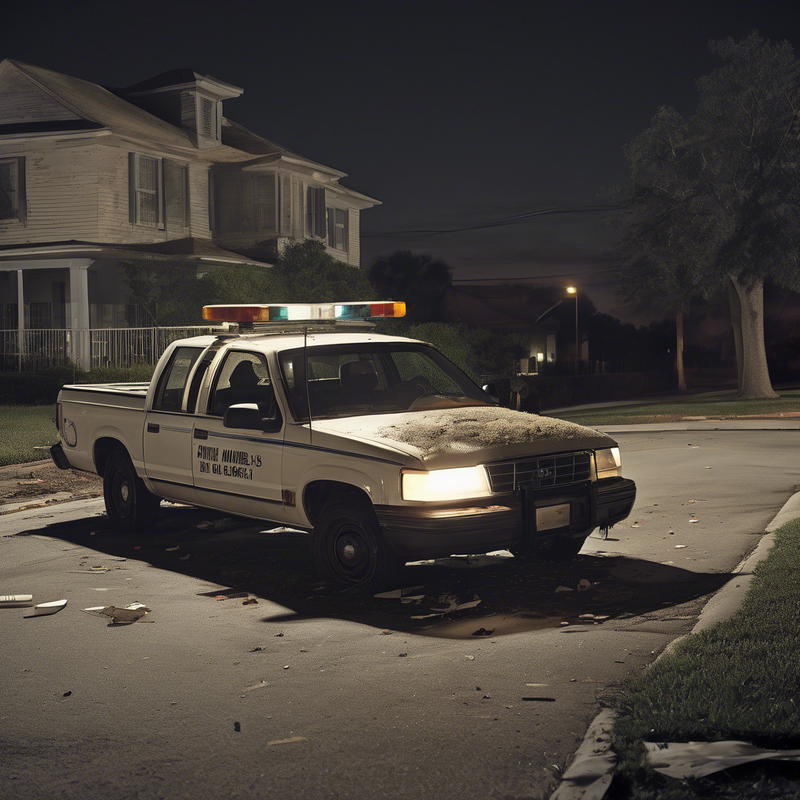
Man Executed for 1992 Triple Murder in Orlando Area: A Lasting Legacy of Violence ⚖️🔪
In the swirling mists of time, when the shouts of anger dissolve into silence, there are some echoes that can never truly fade away. Such is the case of the Orlando triple murder that rocked a tight-knit community in 1992, an event so harrowing that, decades later, it resonates like an unfinished symphony. The recent execution of the man convicted of these brutal killings serves as a grim reminder of the longstanding impact of violence and the complex web of justice that ensnares us all. 🏚️
The Tragedy Unfolds: A Night of Horror
On a seemingly ordinary night in May 1992, three lives were extinguished in an act of senseless violence, leaving families shattered and a community searching for clarity amidst chaos. The victims, two adults and a teenager, became collateral damage in a crime that, like a thunderstorm, seemed to spring from nowhere yet left a trail of destruction that would be felt for generations. What motive could drive one individual to snuff out the lives of others is a question that haunts this story, posing as a profound enigma—a dark reflection of society itself.
The perpetrator, whose identity sadly became synonymous with horror, was arrested and later convicted, but justice often feels like a poor consolation prize for those left behind. The legal battle that ensued revealed layers of complexity, from unreliable testimonies to devastating emotional tolls. Ironically, in a society that prides itself on the rule of law, those numbers—three murdered lives—became mere statistics in a broader narrative about crime and punishment, crammed between the colorful images of other headlines. 📚✨
A Dance with Death: The Legal Proceedings
The execution, carried out decades after the murders, raises poignant questions about the efficacy and morality of the death penalty in America. These trials, like a heart-wrenching choreography, pit victims’ families against the state, a ballet of grief, anger, and unresolved pain. Each side wields its own dagger: for victims’ families, the hope that challenges the very essence of justice; for the accused, the argument for redemption and the sacredness of life. Such is the profound irony surrounding the application of capital punishment, where justice seeks to balance the scales even as the weight of human emotion tips them perilously. ⚖️❤️🩹
– Since 1992, crime rates in Orlando have seen fluctuations, reflecting societal shifts.
– The number of executions nationwide has declined, sparking debates about the death penalty’s efficiency.
– Victims’ families often face lifelong repercussions, both emotional and psychological.
The Aftermath: Community Reflections
Every community has its ghosts, but some hauntings come from shared suffering. The Orlando area, once a vibrant tapestry of dreams, saw a veil of uncertainty drape over it, as families locked their doors a little tighter and parents shielded their children from the shadows of a world painted with violence. The echoes of gunfire serve as a reminder of fragility, urging communities to confront their fears and perhaps, in some instances, transform them into action.
As with any tragedy, the aftermath invites not just mourning but also resilience. Local initiatives emerged, advocating for safer neighborhoods, mental health resources, and dialogues about violence that take root in societal issues rather than individual actions. In this paradox, the community became both the wound and the healing balm—a striking antithesis encapsulating humanity’s capacity to endure. 🌱🤝
The Legacy of Violence: Moving Forward
The legacy of this crime, much like an unyielding shadow, remains palpable yet ambiguous. Will the execution of one man truly bring closure to the families affected? Or will it merely serve to perpetuate a cycle of retribution, muffling the voices yearning for understanding and restorative justice? Here lies the crux: the narrative of violence is not merely written in blood, but etched in the hearts of those left behind, for whom the lost lives resonate like a chilling refrain. 🎶💔
The conversations surrounding this infamous case remind us that justice, in its myriad forms, is as complex as the human heart. In the clash of vengeance and forgiveness, where does society draw the line? It poses a haunting inquiry: can we face our darkest moments and, instead of being pulled down by them, rise like the phoenix—rekindling a thirst for understanding, compassion, and ultimately, peace?