


Ancient Canoe Found in Florida Linked to Region Beyond U.S. 🌊🛶
In a discovery that feels more like the plot of a historical novel than a factual account, archaeologists have unearthed an ancient canoe in the verdant wetlands of Florida—a find that unexpectedly ties the Sunshine State to indigenous cultures centuries ago. With more than just wood and water involved, this canoe reveals a maritime connection that stretches beyond the confines of modern political borders, challenging our perception of ancient cultures and their rich, interconnected histories. Who would have thought this humble vessel could sail us into the depths of a transnational backstory that flourished long before the age of globalization? 🌎
A Time Capsule Revealed
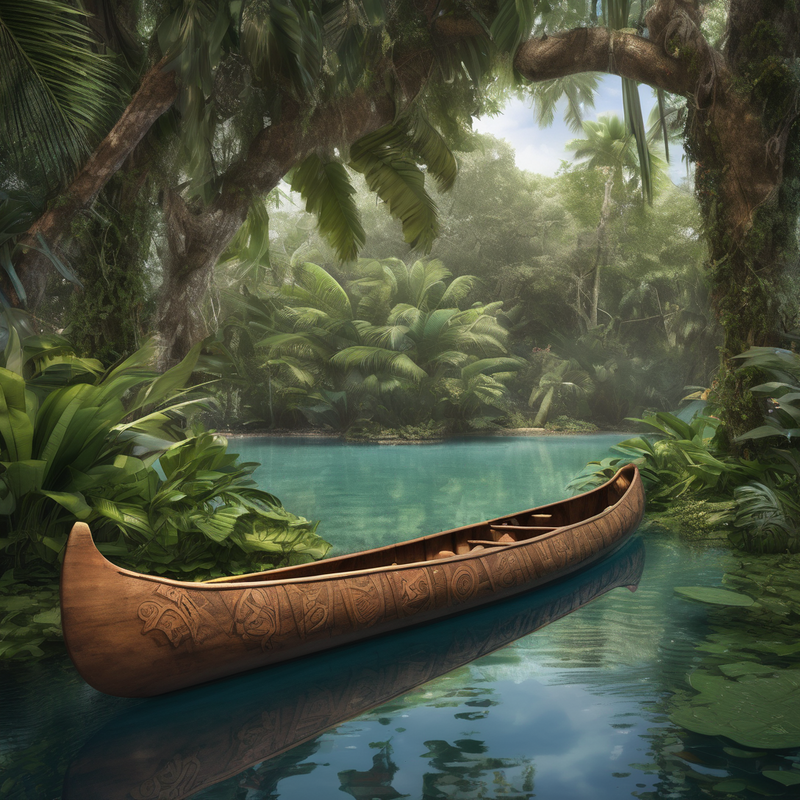
The canoe, dating back over a millennium, appears to have been chiseled and crafted by skilled artisans, echoing a maritime tradition shared by various indigenous populations. Its discovery was no mere happenstance; it was found in a site that had previously yielded artifacts hinting at complex trade networks and cultural exchanges. The irony? While many might think of Florida simply as a vacation hotspot today, it was once a bustling crossroads of indigenous civilizations engaging in intricate trade—like a Cedar Key of the past, bustling with the whispers of lives long gone.
Waves of Heritage: The Canoe’s Intriguing Significance
This canoe isn’t just a relic; it’s a testament to the craftsmanship and navigation skills of the indigenous peoples who navigated Florida’s coastal waters and beyond. Researchers note that this particular design resonates with styles seen in artifacts found as far away as the Caribbean and Central America, effectively creating a striking antithesis between local craftsmanship and distant cultural influences. 🌴🗺️
In its form, the canoe encapsulates a story akin to a poignant ballad: a journey not simply over waves, but across time and space, interweaving narratives of survival, trade, and shared heritage. It suggests that the ancients traveled their watery highways not just to fish or trade goods, but to build dynamic relationships that transcended geographic limits. Isn’t it fascinating to contemplate that while today’s digital communications seem to unite us, these ancient peoples were doing the same, albeit through more tangible means?
From Excavation to Reflection: Understanding the Broader Implications
The implications of this discovery ripple through contemporary discussions on identity and heritage. It raises an important question: how do we define borders? In a world increasingly defined by politics and commerce, what does it mean for communities defined by rich, interconnected histories? It’s not unlike the irony of an ancient cheese unearthed in Italy that schools modern culinary enthusiasts on the gastronomic traditions that bind regions together. 🧀✨
As archaeologists meticulously prepare to study the canoe, we are reminded that each chip and crack bears witness to the lives of those who once relied on it for sustenance and trade. This humble vessel could serve as an educator, revealing stories that weave through time like a tapestry—the threads of which connect various cultures and echo the whispers of a shared humanity. 🌌
Bridging the Gap: Cultural Connections and Modern Awareness
Experts point out that the canoe represents more than an ancient artifact; it stands as a pivotal bridge in understanding the cultural interactions that predate contemporary borders. Just as rivers meander through landscapes unapologetically, the histories of peoples flow across regions, intertwined and interdependent. Today, as we delve into this past, we invite not only an exploration of ancient navigational skills but of contemporary understandings of community and kinship.
What is perhaps most compelling is how this canoe embodies the evocative nature of human resilience—a silent guardian of stories that speak to our frequent urge to connect across divides, whether they are made of water, land, or cultural discrepancies. In an age where divisions can often seem more pronounced than connections, can we find solace in knowing that our ancestors dreamed and navigated beyond their immediate worlds, perhaps encouraging us to do the same in our modern, often fragmented society? 🌍💞
Charting New Waters: The Future of Archaeological Discovery
As scholars anticipate the insights that will emerge from this discovery, the potential for further excavations looms large. If this canoe could tell stories, would it narrate of midnight journeys, sandy shores resonating with laughter, or could it speak of trade excursions that changed the course of entire communities? Only time—and further research—will tell.
This ancient canoe is more than a historical artifact. It encapsulates a reminder that our connections transcend the superficial lines drawn on modern maps. While we dissect cultures through a present-day lens, may we not overlook the timeless currents that bind us. Perhaps it is up to us to discover what those currents whisper—beginning, of course, with an ancient canoe found in Florida. 🌊🛶